












About These Balmy Days
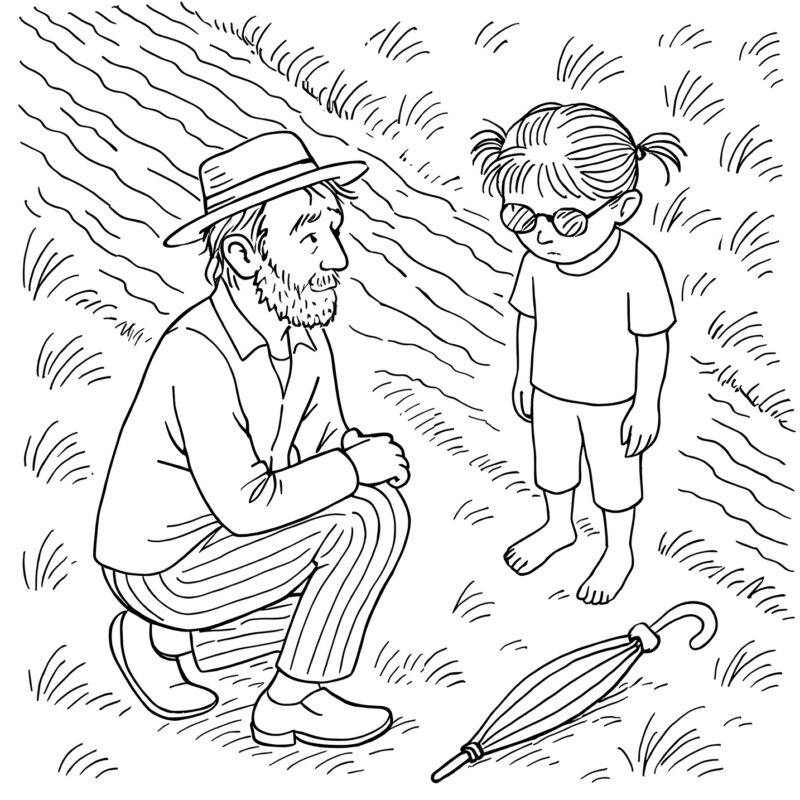
Q: I can sense the author’s bias in some of your novels. But for me, These Balmy Days was harder. The ethos represented by Magellan and his voyage is clearly opposed to what we hear from Tiago on his montado. But I wasn’t able to tell which side of the divide the author was on.
RS: Where we find a paradox in life, I think it’s important to recognize it. Choosing sides, it seems to me, is the opposite of enlightenment. For Blake, desire and the striving to fulfill it was everything. For Christ, suffering was essential. For Buddha, both desire and suffering were life’s greatest curses. Can we do any better than to understand these polarities as we’re living with them?
Q: I felt the joy of Angelo’s unanchored existence with Tenina, but it was mixed with the mournfulness of his forced passage.
RS: That’s one of our tragedies. A profound one, I think. The moment in life when we are most aware of the foolishness of our aspirations is when we are no longer capable of achieving them.
“If my heart aches for Angelo and his little Tenina . . . in that ache there is a kind of celebration.”
Q: And the love that has supported these passions?
RS: It’s like a costume that must be removed.
Q: But amid the sorrow there is joy. The release Angelo feels is something we might all hope for.
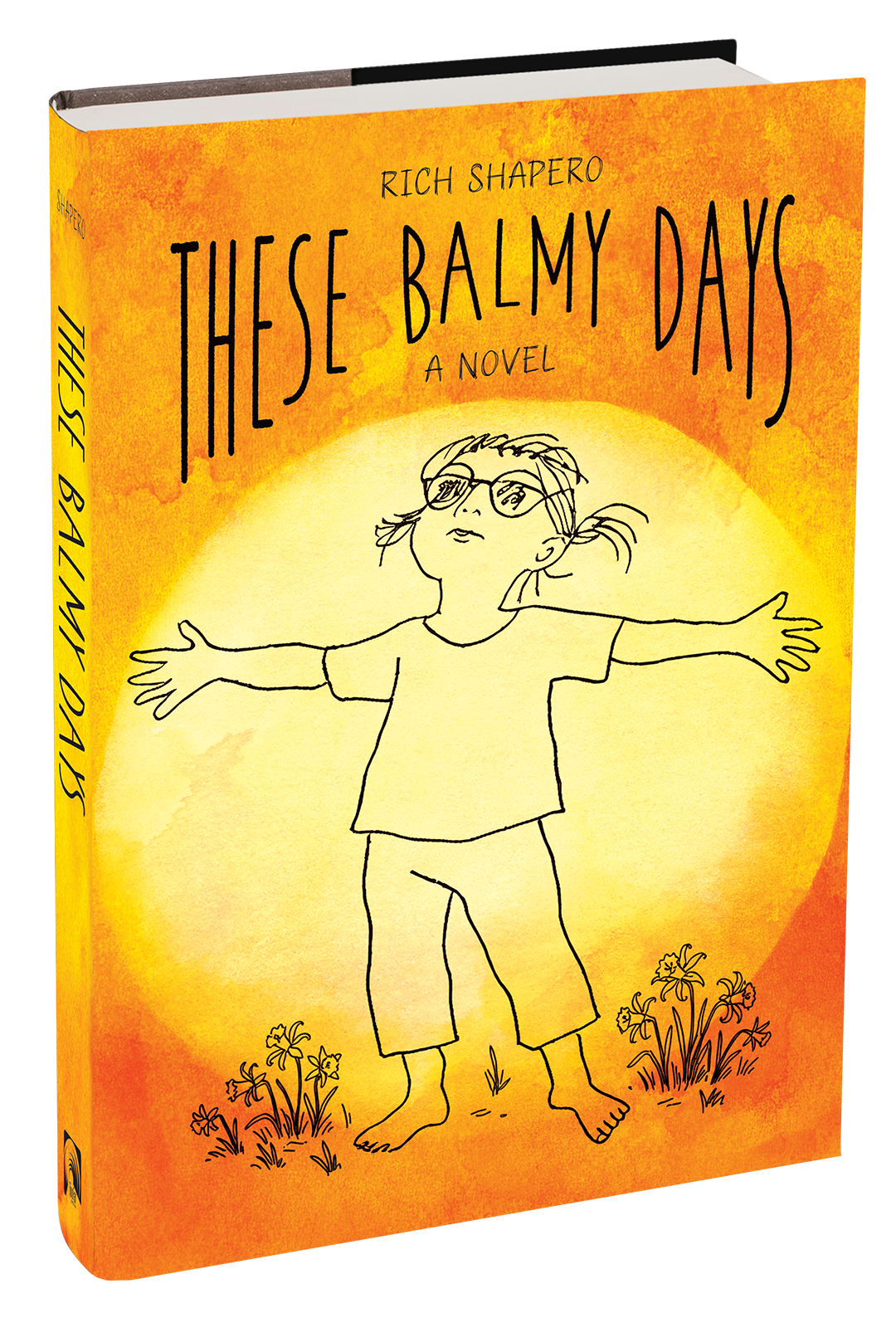
RS: It would be nice to believe that kind of joy can be achieved without the feeling of loss. But Angelo’s joy may require loss. And delusion. If we are to understand ourselves, I don’t think we can rationalize or explain away any of that. We live to fulfill our desires, to find truth, to experience contact and love. But we are mortal, and our desires don’t outlive us. We are forced to let go of desire and achievement. We are forced to experience both love and separation. If my heart aches for Angelo and his little Tenina, and all the ambitions he’s let go of—and the love he feels he’s lost—in that ache there is a kind of celebration.
“Can there ever be an escape from the mournfulness Angelo feels? If there is not, we should accept it. Shouldn’t we?”
Q: Enn is a strange presence. He is both a guide and a threat.
RS: I think of him as the buried recognition we all carry with us. For Angelo, his appearance is unexpected. But Enn has a mission, and he carries it out.
Q: I was struck by how benign all the players are. Raul and Henrique, Inez— Even Dosey, who can never quite get hold of herself. And Enn acts in a kindly, inevitable way. If he’s the reaper, he’s the most gentle version imaginable. No one in this story means anything but good. Except for the Woman in Black, of course. But her “threat,” if we can use that word, is only something Angelo imagines.
RS: How much do we feel the impact of willful evil? The basics of survival no longer plague most of us. The chief threat in our era comes from the vagaries of government, which despite its manifold cruelties is generally well-intentioned. I think this was a lot of my underlying motivation in writing the book. Can there ever be an escape from the mournfulness Angelo feels? If there is not, we should accept it. Shouldn’t we? We should embrace it. Not shun it or pretend it’s beneath us, or imagine there’s a superior human state that will expunge these feelings.
“If you’re a lover of childhood, that love turns to pain when childhood is lost.”
Q: Your love affair with childhood, evident in Too Far and Dreams of Delphine, takes a twist here. We only know Tenina through her grandfather, and that knowledge becomes increasingly questionable.
RS: If you’re a lover of childhood, that love turns to pain when childhood is lost. Most parents who see their children pass into adulthood experience this. How much more intense that experience would be for someone like Angelo.
Q: His childhood home is destroyed by fire. Is there an element of personal history in this?
RS: I grew up in Pacific Palisades. While I was working on These Balmy Days, the Palisades fire destroyed the elementary school I attended, the neighborhood I grew up in and most of the town center. That led me to some unexpected glosses on the idea at the heart of the story. Most of us contemplate mortality in the context of a world that will persist after we’re gone.
Q: You were on the ground in Portugal, where the story occurs.
RS: I was. The southern coast is dramatic, well able to carry the meaning I wanted to load onto it. My experiences there were similar to other settings I’ve chosen for projects: as I marry my ideas to a factual substrate, I get disoriented about what is real and what is figmental. I think that’s at the root of my motivation for doing what I do: the idea that I’m not really borrowing from the real world, but I’m transforming it. After Wild Animus, Mt. Wrangell was never the same.
Q: Your interests have a wide range. Your stories are set in past, present and future; and in locations as far-flung as Malysia and Madagascar.
RS: Extreme locations in time and space help me focus on things that I believe are essential.
Special Thanks
Summer Shapero, Suzanne Dunn, Alexis Schaitkin, Randi Shapiro, Francisco Alves, Miguel Rodriques, Nuno Barros, Rafael Ferreira, Thylbert Gheyselinck, Luís Gonçalves, Paulo Gonçalves, Chris Holt, Neide Pereira and Nick Robinson.
Special Thanks
Summer Shapero, Suzanne Dunn, Alexis Schaitkin, Randi Shapiro, Francisco Alves, Miguel Rodriques, Nuno Barros, Rafael Ferreira, Thylbert Gheyselinck, Luís Gonçalves, Paulo Gonçalves, Chris Holt, Neide Pereira and Nick Robinson.